Behind the Counter: A Same-Day Vape Order Timeline
Most customers only see two moments: the tap that confirms the order and the knock at the door. Everything in between is invisible, but it is where a same-day promise is either kept or quietly broken. This is the operational story of that gap, told as a timeline, from the second an order is confirmed to the moment a parcel changes hands. If you have ever wondered why some Sg vape shop delivery orders arrive in hours while others drift into the next day, the answer sits in the steps nobody talks about.
00:00 — Order Confirmation and the First Check
The clock starts the moment checkout completes. On the surface, a confirmation screen appears and an email or message lands in the customer’s inbox. Behind the counter, a queue entry is created and the real work begins with a stock check. This is not a vague glance at a catalogue; it is a specific match between what was ordered and what physically exists on a shelf right now.
Local stock is the deciding factor in whether a same-day promise is realistic or optimistic. A retailer that holds inventory in Singapore can confirm availability immediately, while one that routes orders through overseas warehouses cannot. That difference shows up later in the timeline, but it is decided here, in the first sixty seconds. Disposable devices, pods and accessories all need to be accounted for individually, because a single missing item can stall an otherwise ready order.
At this stage, the order is also checked against basic eligibility: age verification where required, delivery address within a serviceable zone, and any restrictions that apply to the route. Failing any of these does not cancel the order so much as pause it, which is why some customers receive a follow-up message before anything ships.
00:05 to 00:30 — Picking, Packing and Discreet Presentation
Once stock is confirmed, a picker moves through the shelves. In a well-run operation, this is a short walk rather than a search. Products are grouped by type and model, so an order for a specific Elf Bar variant is pulled from a known location rather than hunted down. Speed here comes from organisation, not urgency.
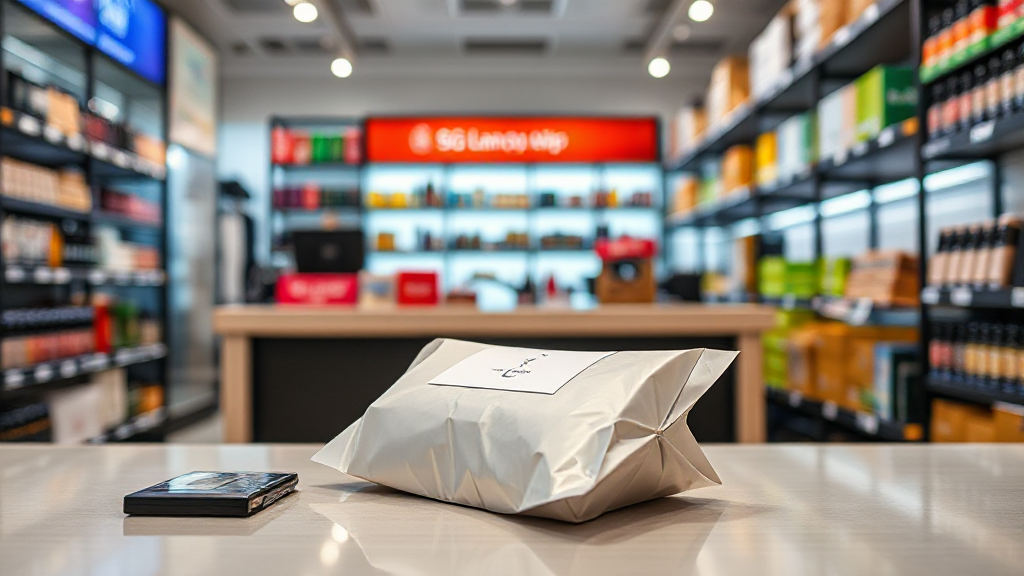
Packing is where the customer experience is shaped without the customer seeing it. Discreet packaging is standard practice for a reason: deliveries pass through lobbies, reception desks and neighbours’ hands, and nobody wants a parcel that announces its contents. The outer layer stays plain, the inner layer protects the device and any pods, and the label carries only what a courier needs.
This is also the point where accuracy is verified. A second check against the order slip catches mismatches before the parcel leaves the building. Mistakes caught here cost a minute; mistakes caught at the door cost a return trip and a lost afternoon. For anyone comparing services, this quiet quality-control step is often what separates a reliable Singapore vape delivery from a frustrating one.
00:30 to 01:00 — Courier Assignment and Route Logic
With the parcel sealed, it enters the dispatch layer. A courier is assigned based on location, current load and the delivery window promised at checkout. This is less like a simple handoff and more like a small routing puzzle: multiple orders leave the same hub, and the sequence in which they are delivered affects everyone’s arrival time.
Route logic favours density. Orders clustered in the same district travel together, while outlying addresses may wait for a later run. This is why two customers who order at the same minute can receive their parcels hours apart without anyone doing anything wrong. The system is optimising for the whole batch, not for a single address. lana vape sg
During this window, the customer usually receives a notification that the order is on its way. That message is the visible tip of a process that has already involved stock verification, picking, packing and dispatch. A Lana vape same day delivery promise is credible precisely because these steps are compressed into a tight, repeatable sequence rather than improvised per order.
01:00 to 02:30 — In Transit and the Variables Nobody Controls
Transit is the least predictable part of the timeline. Traffic, weather, building access rules and lift waiting times all sit outside the retailer’s direct control. What can be controlled is preparation: parcels are labelled clearly, contact numbers are current, and delivery instructions are passed to the courier before departure rather than discovered at the gate.
This is where the difference between a local operation and a long-distance one becomes obvious. A local courier covers short distances, which means fewer failure points and quicker recovery when something goes wrong. A cross-border shipment adds customs, sorting centres and days of uncertainty. For time-sensitive purchases, proximity is not a luxury; it is the mechanism that makes same-day possible at all.
Customers sometimes ask why a delivery cannot simply be rerouted mid-journey. The honest answer is that a courier’s route is a chain, and changing one link moves every link after it. Good dispatch teams handle exceptions by communicating quickly rather than by quietly delaying, which is why a short message about a delay is usually a sign of a functioning operation rather than a failing one.
02:30 to 03:00 — Handover, Verification and the Last Metre
The final stage is the handover. The courier arrives, confirms the recipient, and completes the delivery. In Singapore’s urban environment, this step involves more friction than outsiders expect: condominium security desks, office receptions, locked gates and instructions to leave parcels in specific places. Each of these adds minutes that were never visible on the tracking page.
Verification protects both sides. Confirming the recipient and the order details prevents misdeliveries, which are especially important for age-restricted products. A courier who rushes this step creates problems that take far longer to resolve than the few seconds saved.
Once the parcel is in hand, the order closes. For the customer, the timeline ends. For the retailer, the data from that delivery feeds back into the next one: which routes were slow, which buildings caused delays, which time slots worked best. This feedback loop is how a Vape delivery sg service improves without changing its outward promise.
After Delivery — What the Timeline Reveals About Reliability
Step back and the pattern is clear. A same-day promise is not one action but a chain of small, dependent actions, and the chain is only as strong as its weakest link. Local stock removes the longest delay. Discreet packing removes a common source of customer anxiety. Route logic explains why identical orders can arrive at different times. Verification prevents the errors that generate the most complaints.
This is also why the visible parts of a vape shop — the website, the product photos, the checkout flow — tell only part of the story. The operational layer behind them decides whether the experience matches the expectation. A retailer with ready local stock and a disciplined dispatch process can absorb a busy evening without collapsing; one without those foundations will eventually miss a promise, no matter how good its interface looks.
For buyers, the practical takeaway is to read the timeline backwards. If a shop can confirm local availability instantly, pack discreetly, and dispatch within the same city, the same-day claim has something real underneath it. That is the quiet standard behind Singapore lana vape orders that arrive when they said they would, and the reason the gap between confirmation and knock at the door is worth understanding. Reliability, in the end, is just a timeline that holds.